Professional Foundation Bearing Capacity and Geotechnical Analysis Solutions with SETAF2018
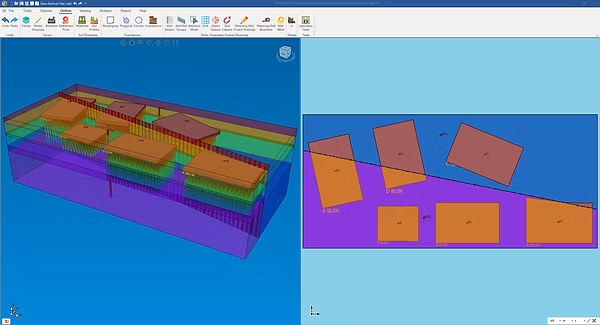
SETAF2018 is a comprehensive geotechnical software that integrates foundation bearing capacity analyses and complex consolidation settlement calculation processes into a single, unified platform. The software produces high-accuracy results for shallow foundations such as isolated foundations and raft foundations, as well as various deep foundation types including bored pile raft foundations. Critical immediate settlement and time-dependent deformation calculations are performed in full compliance with international standards and the latest engineering regulations.
Advanced Analysis and Bearing Capacity Methods for Shallow Foundations
SETAF2018 offers the most reliable approaches in engineering literature for analyses conducted on shallow foundations. The software includes modules for Terzaghi bearing capacity, Meyerhof bearing capacity, and Vesic bearing capacity, allowing for designs suited to diverse soil conditions.
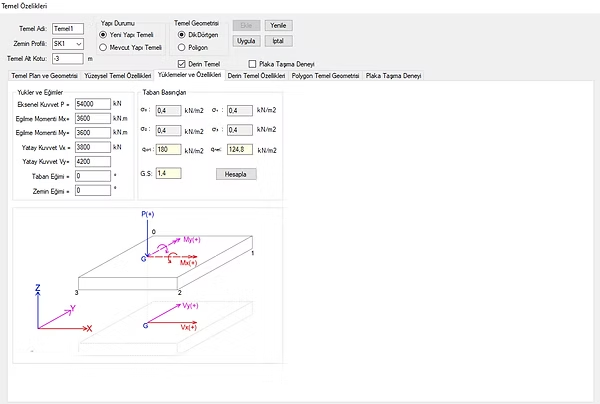
• Meyerhof Bearing Capacity Formula: This method considers horizontal forces and eccentricity effects alongside vertical loads, performing precise calculations via the Meyerhof bearing capacity factors table.
• Terzaghi Bearing Capacity Formula: In characteristic strength and safe bearing capacity analyses, Terzaghi bearing capacity is calculated using shape factors based on the foundation geometry.
• Vesic and Hansen Approaches: Complex geometric conditions, such as foundation base inclination and ground slope, can be analyzed with the Vesic bearing capacity equation. Additionally, alternative design scenarios can be evaluated using the Hansen bearing capacity calculation.

Deep Foundations and Piled Raft Foundation Design Processes
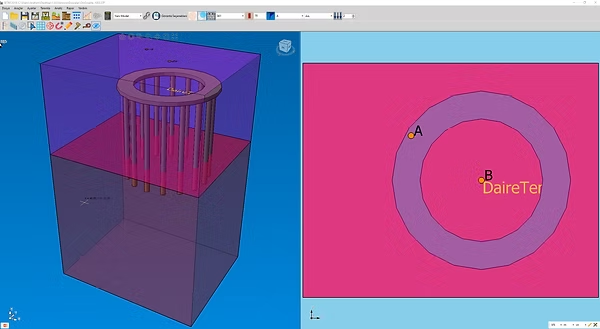
Deep foundations, which provide safe solutions in complex soil structures, are designed using SETAF2018’s advanced modeling tools. During the piled foundation design process, the behavior of rigid columns and pile groups is meticulously analyzed.
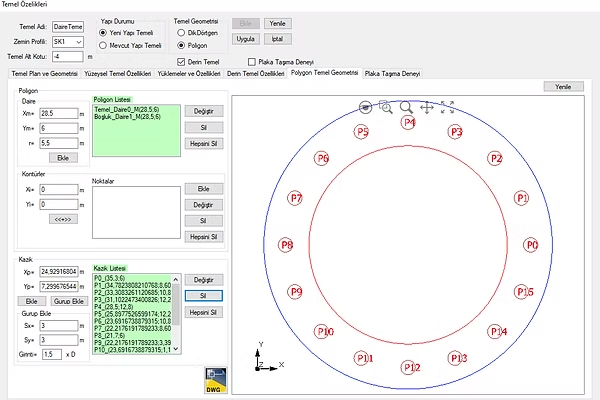
The software evaluates skin friction and tip resistance separately using various methods such as alpha, beta, and lambda for the pile foundation bearing capacity calculation. Particularly in the piled raft foundation design module, parameters like inter-pile spacing (Sx, Sy) and group efficiency are automatically calculated. The results of the bearing capacity of piles calculation can be exported in pile bearing capacity calculation excel format to allow engineers to conduct their own custom studies.

Precise Settlement Analysis: Immediate and Consolidation Settlement
Determining the correct amount of consolidation settlement and immediate settlement is a critical stage for structural safety in foundation engineering. SETAF2018 calculates stress increases within the soil using Boussinesq and Mindlin-Geddes equations.
• Analysis Details: The software divides soil layers into numerous sub-layers to calculate unit strains at every point.
• Reporting and Excel Integration: The results of the consolidation settlement calculation are presented through time-settlement graphs and detailed tables. All these data can be saved as a consolidation settlement excel file for professional reporting processes.

Ground Improvement Options
In cases where ground improvement is required beneath the foundation, rigid columns can be used. SETAF2018 supports the following methods:
-
Deep Soil Mixing (DSM) columns
-
Jet Grout columns
-
Stone columns
These methods can be defined and reported within the same foundation model.

Internal Voids and Custom Geometry
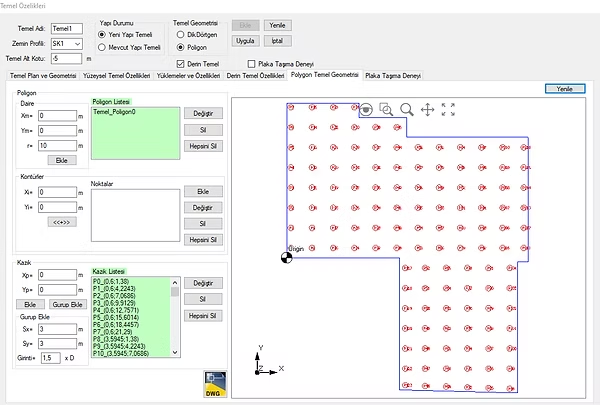
Internal voids can be defined in rectangular, circular, and polygon foundations. This allows foundation geometries to be adapted to architectural or structural constraints.

Technical Support and Reliable Infrastructure
SETAF2018 users feel the strong technical support of the Setaf team at every stage of their projects. Thanks to professional support channels and comprehensive technical documentation, the most complex geotechnical problems are resolved rapidly. The software, which is fully compatible with international standards such as Eurocode 7, enables the creation of transparent and traceable reports for authorities.